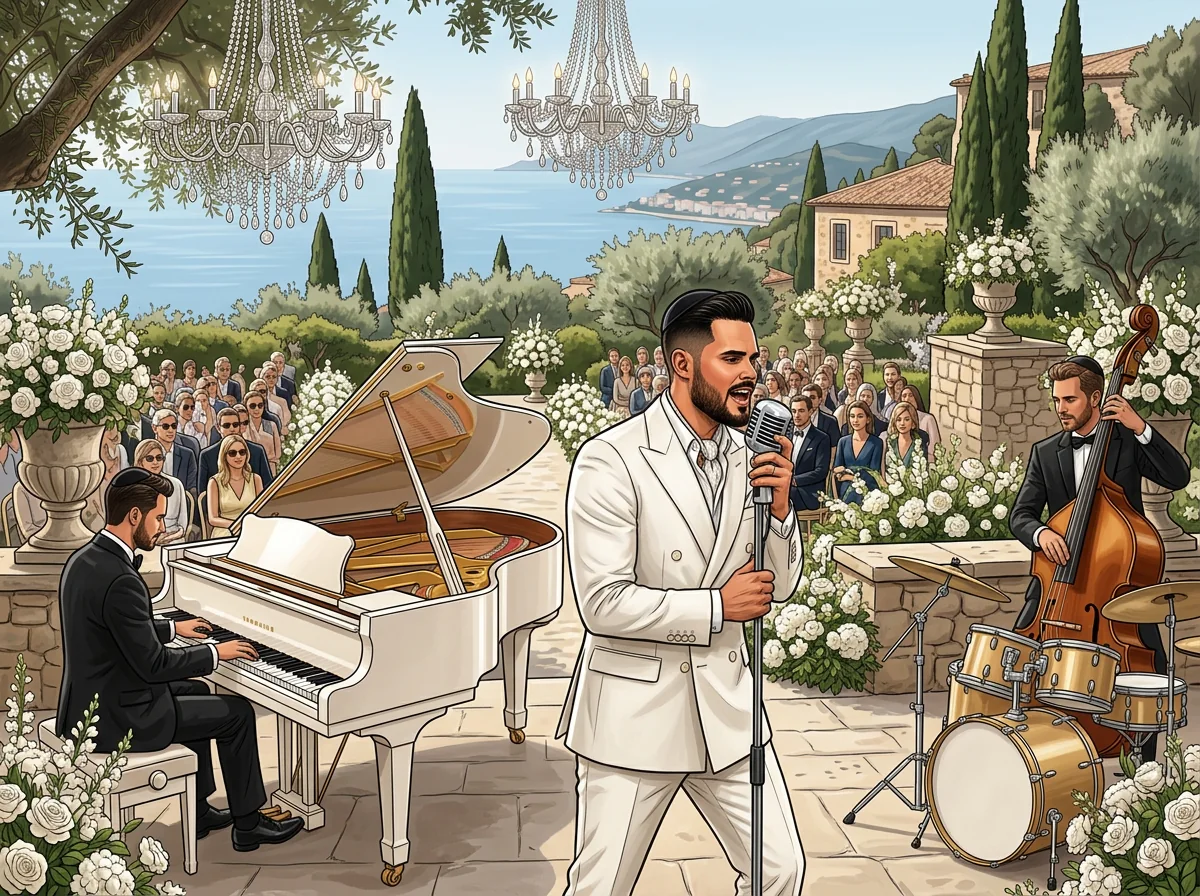
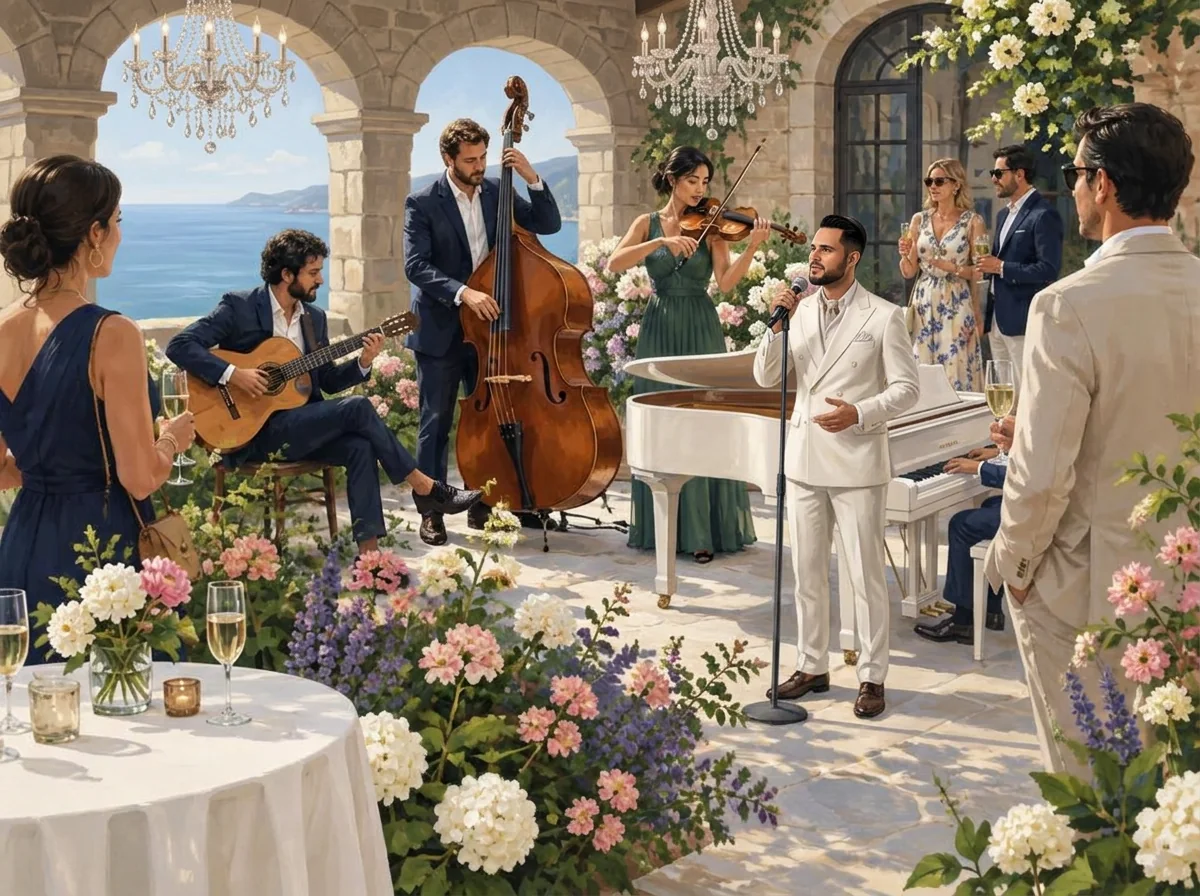
Describe the reception’s social rhythm
Will guests arrive gradually, gather for a short interval or remain in one area for a longer welcome? Sketch the pattern rather than assuming a fixed audience. The opening may need to acknowledge arrivals, while a later passage can offer a stronger point of focus. Explain whether the couple will circulate throughout or make a distinct entrance, because that changes where attention naturally gathers and when music should yield.
Discuss texture before ensemble size
A voice supported by a spare musical texture creates a different invitation from a rhythmically fuller arrangement. Neither is inherently more refined. Ask which elements matter most: clear lyrics, harmonic warmth, gentle movement or recognisable melodies. Then discuss ensemble possibilities in relation to those priorities. The word acoustic describes an artistic direction, but should not be treated as proof that no technical planning or venue discussion is needed.
Map conversation and circulation
Identify likely gathering points, refreshment queues and routes between spaces with the planner and venue team. Consider whether the proposed performance position supports the reception or competes with a busy bottleneck. If the event might move between outside and inside, discuss both settings separately. Their suitability, permissions and practical requirements need confirmation; a musical idea that suits one location should not automatically be transferred unchanged to another.
Give the welcome a musical ending
The reception ensemble also needs a clear relationship with what follows. Agree how the final passage connects to seating, an announcement or the couple’s next moment, including who communicates a delay. Tal Vaknin is a performing artist. SPS shapes repertoire, ensemble and artistic direction and coordinates the performance with planner and venue teams. Bring that conversation a description of guest behaviour, not only a list of favourite tracks or preferred instruments.
Before you enquire
- Describe arrivals, conversation patterns and the couple’s movement.
- Choose musical priorities before discussing the number of performers.
- Confirm the performance position and the cue ending the reception.