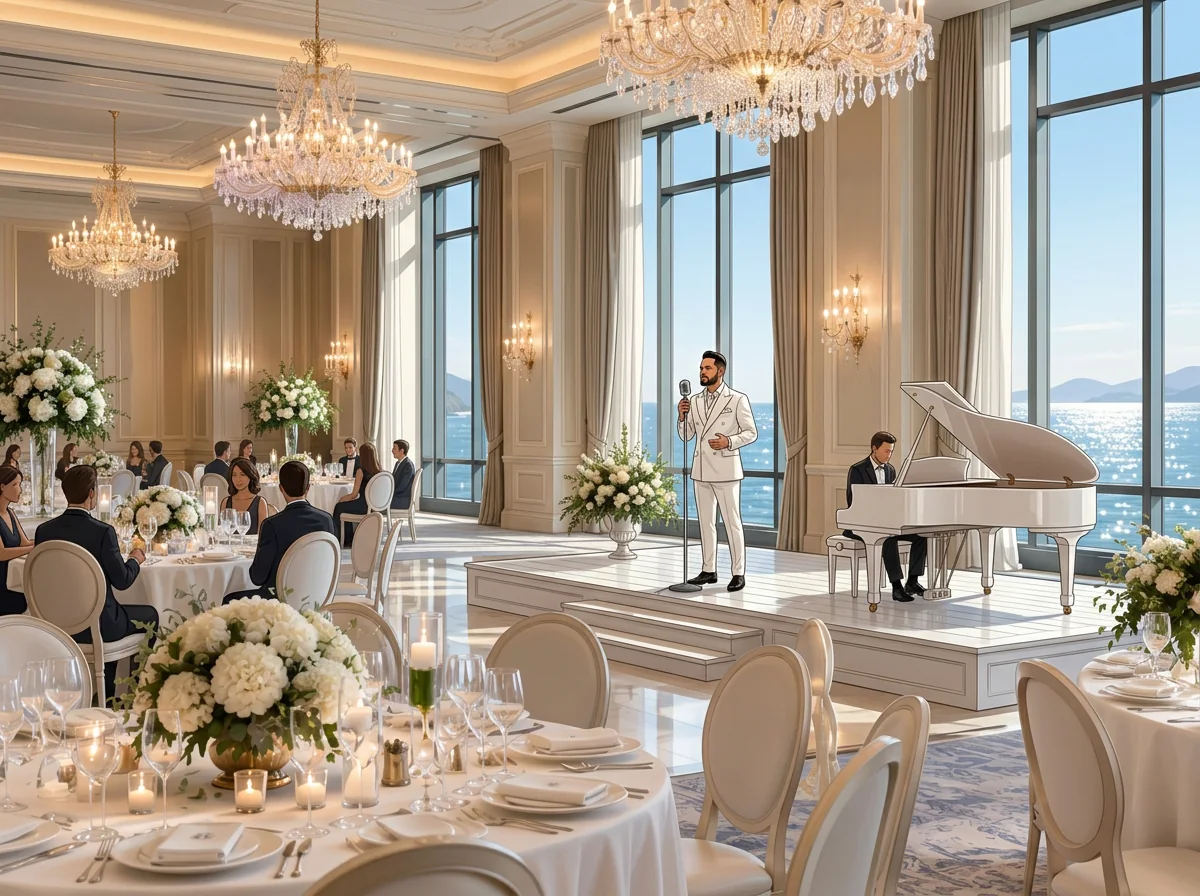

Design the transition into listening
Choose a clear threshold between reception and performance. A short host introduction, a completed service passage, and an agreed pause in other activity can establish that threshold. Avoid introducing the artist while guests are still moving between spaces. Ask the planner who can confirm that the room is ready, rather than relying solely on the printed start time or an optimistic estimate.
Give the centerpiece one dramatic purpose
Decide whether the performance should create anticipation, offer reflection, or release the formality of the evening. Trying to accomplish all three in a short sequence often produces abrupt changes. Build a simple arc with an opening that gathers attention, a central emotional idea, and an ending that clearly hands the evening back to its host. Recognition alone is not a sufficient selection criterion.
Separate artistic decisions from protocol
Name one person who approves repertoire and another who confirms protocol requirements. If those responsibilities belong to the same person, state that explicitly. SPS shapes repertoire, ensemble, and artistic direction and coordinates the show with planners and venue teams. Tal Vaknin is the performing artist. Keeping these roles distinct helps questions reach the right person and prevents late ceremonial changes from becoming contradictory artistic instructions.
Plan the exit as carefully as the entrance
An elegant ending needs a destination: applause, a host return, a toast, or a move into dinner. Specify which comes next and who initiates it. Prepare a shorter version of the sequence in case earlier proceedings overrun, preserving its essential emotional shape. The goal is not to fill every available minute, but to leave guests with a coherent moment that belongs to this particular gala.
Before you enquire
- Identify the person who confirms that guests and service are ready.
- Approve one emotional purpose and a shortened performance sequence.
- Write the host introduction and the handover after applause.